 Moodle Login
 WiseNet App
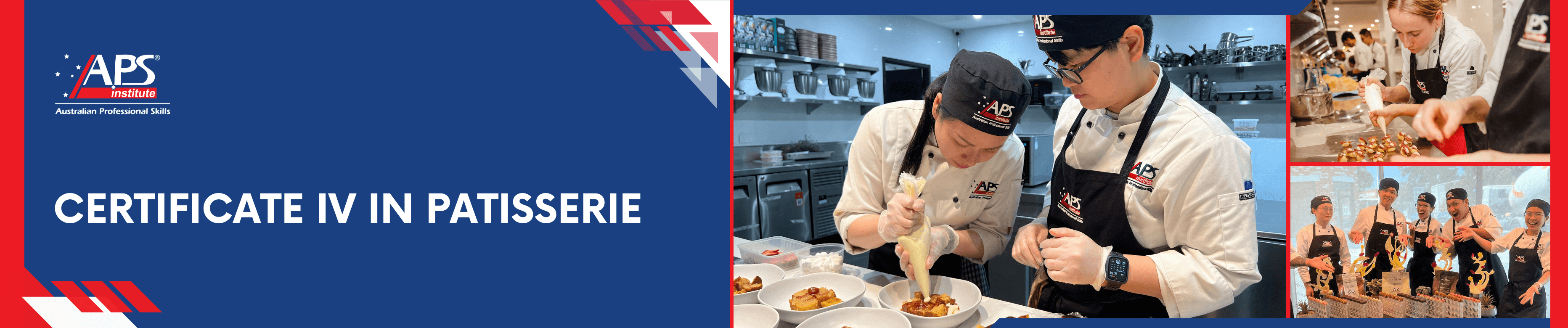
Certificate IV in Patisserie
|
|
CRICOS Course Code: 109472GVET National Code: SIT40721 |

IMPORTANT NOTE: This course is not suitable for persons unable to handle meat, seafood, poultry or dairy. We cannot guarantee that our kitchen facilities are free from potential allergens, including airborne particles of potential allergens. Accordingly, this course may not be suitable for people with severe allergies, including nuts allergies. Please note that all students must complete the units of competency required.
Course Description
Pre-requisite: SIT31021 Certificate III in Patisserie
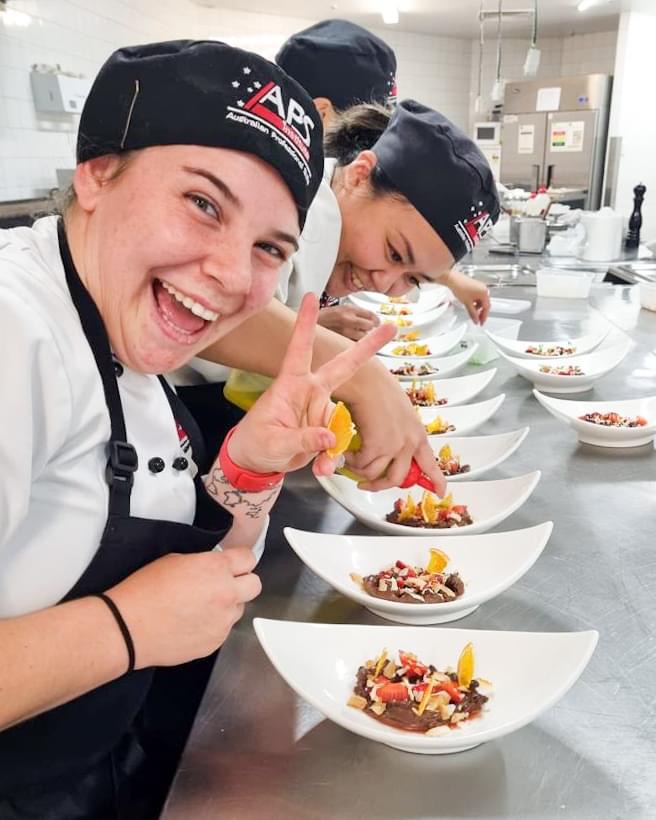
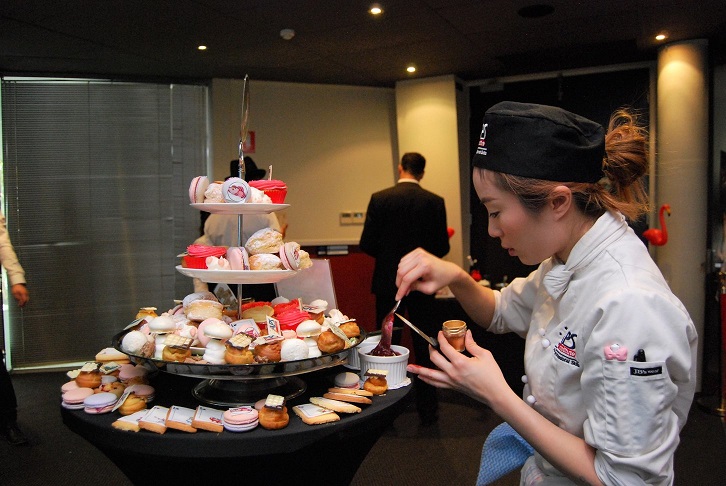
This specialised course is designed to provide students with a broad range of pastry skills and knowledge. Students will develop a range of preparation and presentation skills synonymous with the fine tuned skills required of a fully qualified patissier or pastry chef.
This is a six-month course that aims at refining a patissier to an advanced level of cake and dessert finishing, chocolate and sugar sculpting, design creative recipes and menu. This course covers how to design decorative showpieces by using advanced sugar and chocolate work, confiserie and petit fours.
The Certificate IV in Patisserie is an advanced skills course, providing students with kitchen supervision skills and advanced cookery skills. Subjects taught at this level include staff supervision skills, stock control processes, financial management and advanced catering control. Students are required to undertake face to face theory and practical training in kitchen operations.
Students are required to undertake workplace training in various commercial kitchen settings, such as in restaurants, hotels, clubs, pubs, cafes, cafeterias and coffee shops.
Career outcomes:
This qualification provides a pathway to work in various kitchen settings, such as restaurants, hotel, clubs, pubs, cafes, cafeterias and coffee shops. Possible job titles include:
- Senior Pastry Chef
- Patissier
- Chef de Cuisine

Unit Code |
Unit Name |
Core Units |
|
| BSBTWK501 | Lead diversity and inclusion |
| SITXFSA005 | Use hygienic practices for food safety |
| SITXFSA006 | Participate in safe food handling practices |
| SITHCCC023 | Use food preparation equipment |
| SITHCCC027 | Prepare dishes using basic methods of cookery |
| SITXINV006 | Receive, store and maintain stock |
| SITHCCC034 | Work effectively in a commercial kitchen |
| SITHPAT016 | Produce desserts |
| SITHCCC042 | Prepare food to meet special dietary requirements |
| SITHPAT011 | Produce cakes |
| SITHPAT012 | Produce specialised cakes |
| SITHPAT015 | Produce petits fours |
| SITHPAT017 | Prepare and model marzipan |
| SITHPAT013 | Produce pastries |
| SITHPAT014 | Produce yeast-based bakery products |
| SITXHRM007 | Coach others in job skills |
| SITXCOM010 | Manage conflict |
| SITXFIN009 | Manage finances within a budget |
| SITXHRM008 | Roster staff |
| SITXHRM009 | Lead and manage people |
| SITXMGT004 | Monitor work operations |
| SITXWHS007 | Implement and monitor work health and safety practices |
| SITHPAT018 | Produce chocolate confectionery |
| SITHPAT019 | Model sugar-based decorations |
| SITHPAT020 | Design and produce sweet showpieces |
| SITHKOP013 | Plan cooking operations |
Elective Units |
|
| SITHKOP012 | Develop recipes for special dietary requirements |
| SITHCCC038 | Produce and serve food for buffets |
| SITXFSA008 | Develop and implement a food safety program |
| HLTAID011 | Provide First Aid |
| SITXWHS005 | Participate in safe work practices |
| SITHKOP009 | Clean kitchen premises and equipment |

Mode of Delivery
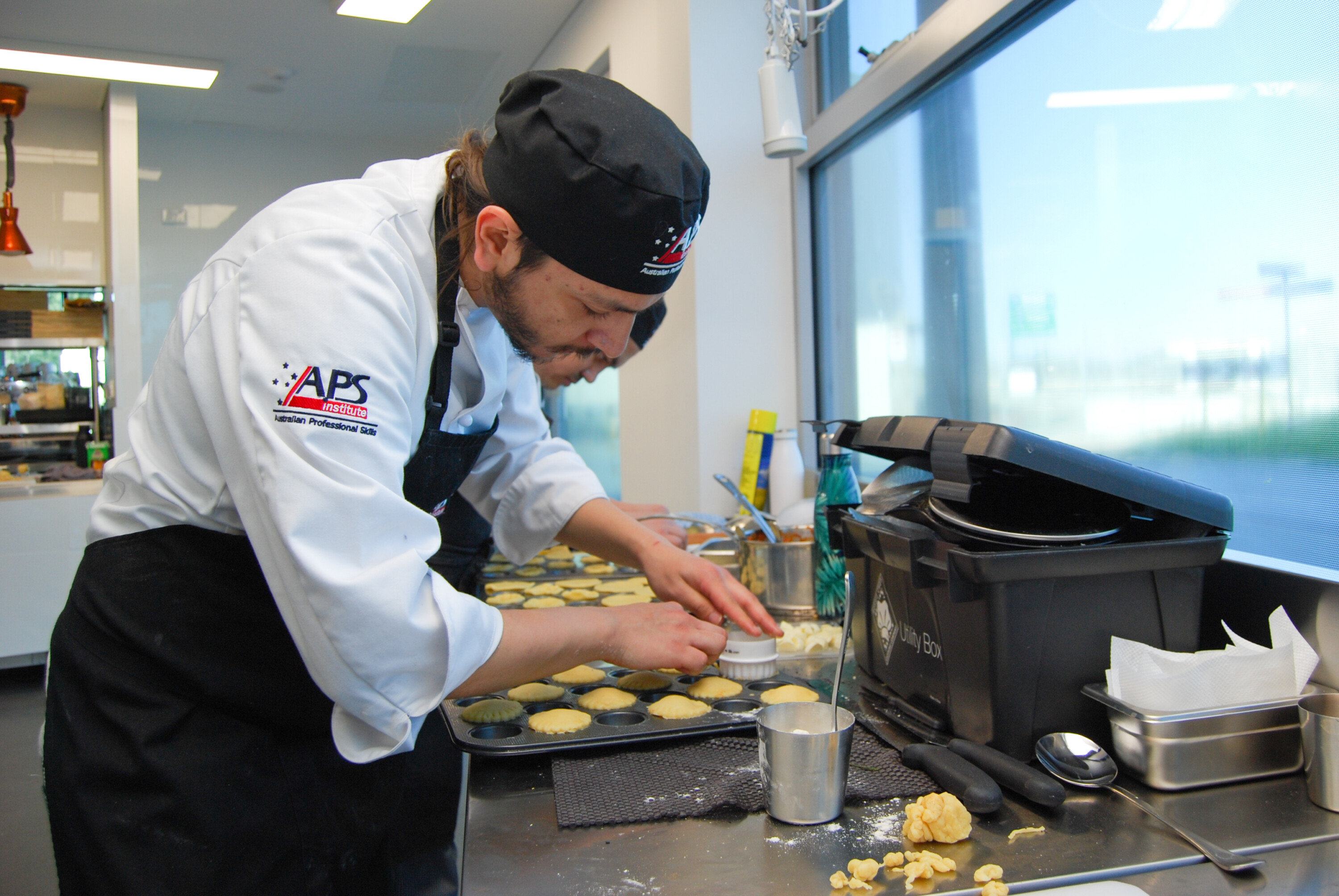
Each day of delivery follows the same structure. The first 2 hours involves trainer lead but student focussed explanation, demonstrations, presentations, questions and answers, student practice. The second 2 hours involves the trainer and student undertaking their practical assessment tasks in a commercial kitchen utilising the specialised training facilities under the required supervision of the trainer.
The second day of delivery is conducted at the commercial kitchen in a fully operational commercial kitchen for all practical work.
Career Outcome
This qualification provides a pathway to work in various kitchen settings, such as restaurants, hotel, clubs, pubs, cafes, cafeterias and coffee shops. Possible job titles include:
- Senior Pastry Chef
- Patissier
- Chef de Cuisine
Course Duration
Certificate III in Patisserie (pre-requisite) – 52 weeks (1 year)
Certificate IV in Patisserie – 26 weeks (6 months)
Entry Requirements
- For domestic students requirements, please view the page for entry requirements here.
- For international students and English language requirements, please view the page for entry requirements here.
- This course is not suitable for persons unable to handle sugar or dairy products.
- Have a passion to work in the kitchen or hospitality industry
Timetable
Students need to attend face to face training at APSI campus and other training locations for a minimum of 20 hours per week.
Class hours (Practical Classes): Monday to Saturday - between 7 am to 8 pm.
Class hours (Theory Classes): Monday to Friday - between 8:30 am to 5 pm.
Timetables/Delivery Schedules/Classes are subject to change without prior notice due to availability of training kitchens and teaching staff. Students will be given a timetable during orientation.
Assessment Methods
Assessment is based on the principles of competency based training. Performance of learners is assessed on their ability to perform the task(s) to industry standards. In order to ensure the principles of validity are upheld are variety of learning styles and a range of assessment strategies are used.
Assessment for each unit of competence will be through a combination of classroom based and work placement tasks. Classroom based assessment includes but is not limited to:
- Classroom exercises
- Assignments
- Practical demonstrations
- Group Activities
- Projects
- Verbal and/or written questions
Students are advised well in advance of assessment activities and a student may put forward for consideration any special needs they may have. The assessment criterion is documented in all modules, and workbooks. Dates of assessment are provided on the first day of class along with a timetable. Students may be assessed by a combination of continuous assessment and examinations. Continuous assessment may be based on competencies and marks, or a combination of both.
Uniform
All commercial cookery and patisserie students are required to purchase one full set of chef’s uniform through APSI’s designed supplier. The chef’s uniform consists of chef’s jacket, trousers, apron, chef’s hat and protective footwear. All students must wear full set of chef’s uniform when they attend training in the commercial kitchen.
Students are also required to purchase one full set of knives and pastry tool kit for all practical classes.
Dress code while attending theory class at APSI campus
There is a dress code for all hospitality students. Students are required to wear a white shirt / blouse and black trousers or skirt while attending class. Flat black non-slip covered shoes must be worn at all times.
All learners are required to wear in accordance with Perth Hospitality Academy Front of House and Cookery Students Dress Code while attending workplace training.
Recognition of Prior Learning
Recognition of Prior Learning (RPL)
RPL is available to anyone who has experience working in a commercial kitchen.
RPL:
- provides an alternative pathway to achieving a qualification without course attendance
- is a consultative process between with the candidate and the assessor to determine whether the candidate has acquired the requisite learning, skills and knowledge to demonstrate that they have achieved the required learning outcomes or performance criteria of the course or qualification, for which the candidate is seeking
- identifies where appropriate additional learning experiences or training gaps are needed to achieve the course or qualification
- is the conduct of an assessment to confirm competency.
APSI has developed a process that promotes holistic and task-based assessment. It focuses on relating assessment activities to actual job tasks. The intention of this model is to streamline and simplify the process of recognising competency.
Prior to RPL, information is provided to the candidate on the assessment process. Specific advice is given to each candidate on how they can demonstrate their competence and what documentary evidence is required to support their application. Each industry has unique documents that can provide evidence of experience and competence.
The candidate is required to provide adequate information prior to, throughout and after a training and assessment experience. The assessor, in this process, needs to be fully aware of the needs of the candidate and help them identify relevant workplace personnel who can confirm the candidate’s competency.
The focus of the APSI streamlined holistic assessment process is to focus on demonstrated skills and knowledge and not to rely purely on documentary evidence as the main source of evidence.
Some examples of documentary evidence that can support the process include:
- licences such as First Aid, RSA
- CV or work history with details of job role and responsibilities
- previous qualifications from overseas and Australia
- certificates and records of results or assessments completed with other RTO’s
- photographs of work undertaken
- samples of related project work
- diaries of tasks performed
- task sheets/job sheets/logbooks
- site training records
- pay slips / employment contracts / job descriptions
- memberships of relevant professional associations
- references/letters/third party reports from previous employers/supervisors
- industry awards
- performance appraisals
Accreditation
Articulation
Employment Skills
(Source: AQF Implementation Handbook 2007)
Location of Delivery
East Perth main campus
Wellington Fair, 40 Lord Street, East Perth, WA 6004 Western Australia
Practical kitchens and industry work placement
Rendezvous Hotel Perth Scarborough
Address: 148 The Esplanade, Scarborough, WA 6019
Rendezvous Hotel Perth Central
Address: 24 Mount Street, Perth WA 6000
Website| rendezvoushotels.com
Industry Workplace Training
At the Workplace approved by your course coordinator
Disclaimer
The information contained on this website is current at the time of publishing. Australian Professional Skills Institute reserves the right to change the admission requirements, fees, location of delivery and units of competency whenever necessary. Please contact us for the most current information.